

ProFoam & Coatings Guides
Open-Cell vs. Closed-Cell Spray Foam
Open-cell spray foam is lighter, softer and more economical, with roughly R-3.5 to R-3.8 per inch. Closed-cell is denser and more rigid, with roughly R-6 to R-7 per inch, and resists moisture. In South Florida, open-cell is common on home roof decks, while closed-cell is the usual choice for metal buildings and warehouses.
The short version
Open-cell
Lighter and softer, about R-3.5 to R-3.8 per inch, great at air sealing and sound absorption, and usually the more economical choice for home attics.
Closed-cell
Dense and rigid, about R-6 to R-7 per inch, moisture-resistant, and adds strength to the surfaces it’s sprayed on.
Cost
Closed-cell costs more per board foot. See our cost guide.
Moisture
Closed-cell resists moisture and acts as a vapor retarder at the right thickness. Open-cell lets moisture pass through.
Where it fits
Open-cell for most home roof decks; closed-cell for metal buildings, warehouses and tight spaces.
When open-cell makes sense
Most South Florida homes with wood roof decks are sprayed with open-cell foam to create a sealed attic. It expands to fill irregular spaces, seals air leaks well and costs less for the large area of a roof deck.
Open-cell also absorbs sound, so it helps with outside noise and noise between rooms. See spray foam attic insulation.
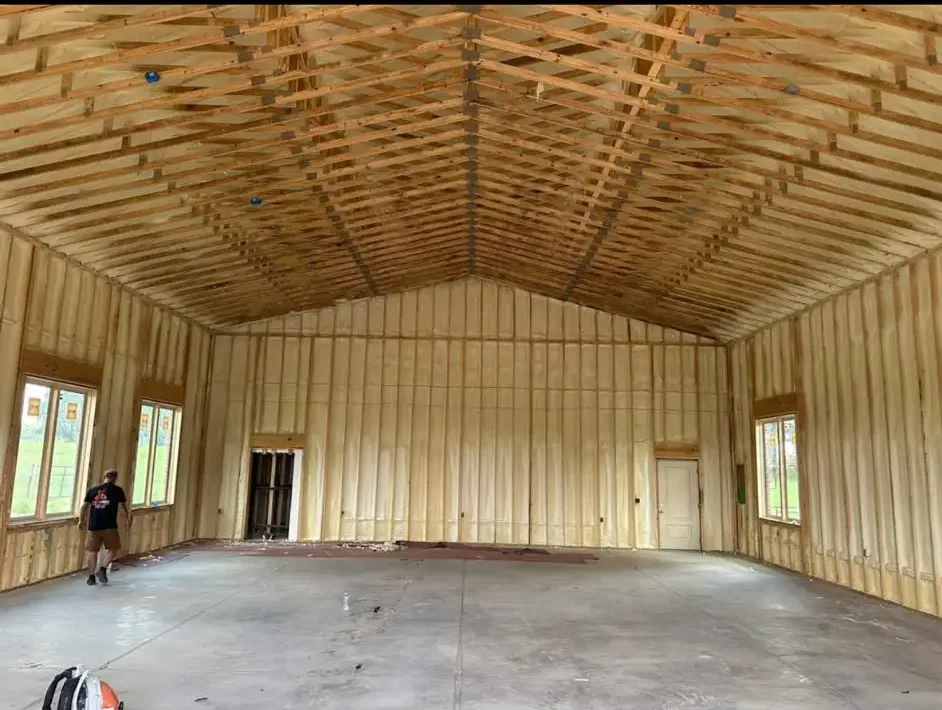

When closed-cell makes sense
Closed-cell is the go-to wherever moisture and condensation are a problem, especially on metal roofs and walls. It keeps humid air from reaching the cool metal, which is what stops the drips and rust. See metal building insulation and warehouse insulation.
It’s also used where space is tight and you need more R-value per inch.
Can you use both?
Yes. Many projects use open-cell for most of the building and closed-cell where its strengths matter. We’ll recommend the right foam for each area during a free inspection.
Frequently asked questions
Which is better for a Florida attic?
For most homes, open-cell on the roof deck. Closed-cell may be used in specific areas where moisture or space is a concern.
Is closed-cell foam a vapor barrier?
At sufficient thickness, closed-cell foam acts as a vapor retarder. Open-cell does not.
Have a question about your building? Ask us
Call (954) 408-5332 or request an estimate online, and we’ll schedule a free inspection.